
My midyear reading roundup📚
My favorite reads in the first half of 2026

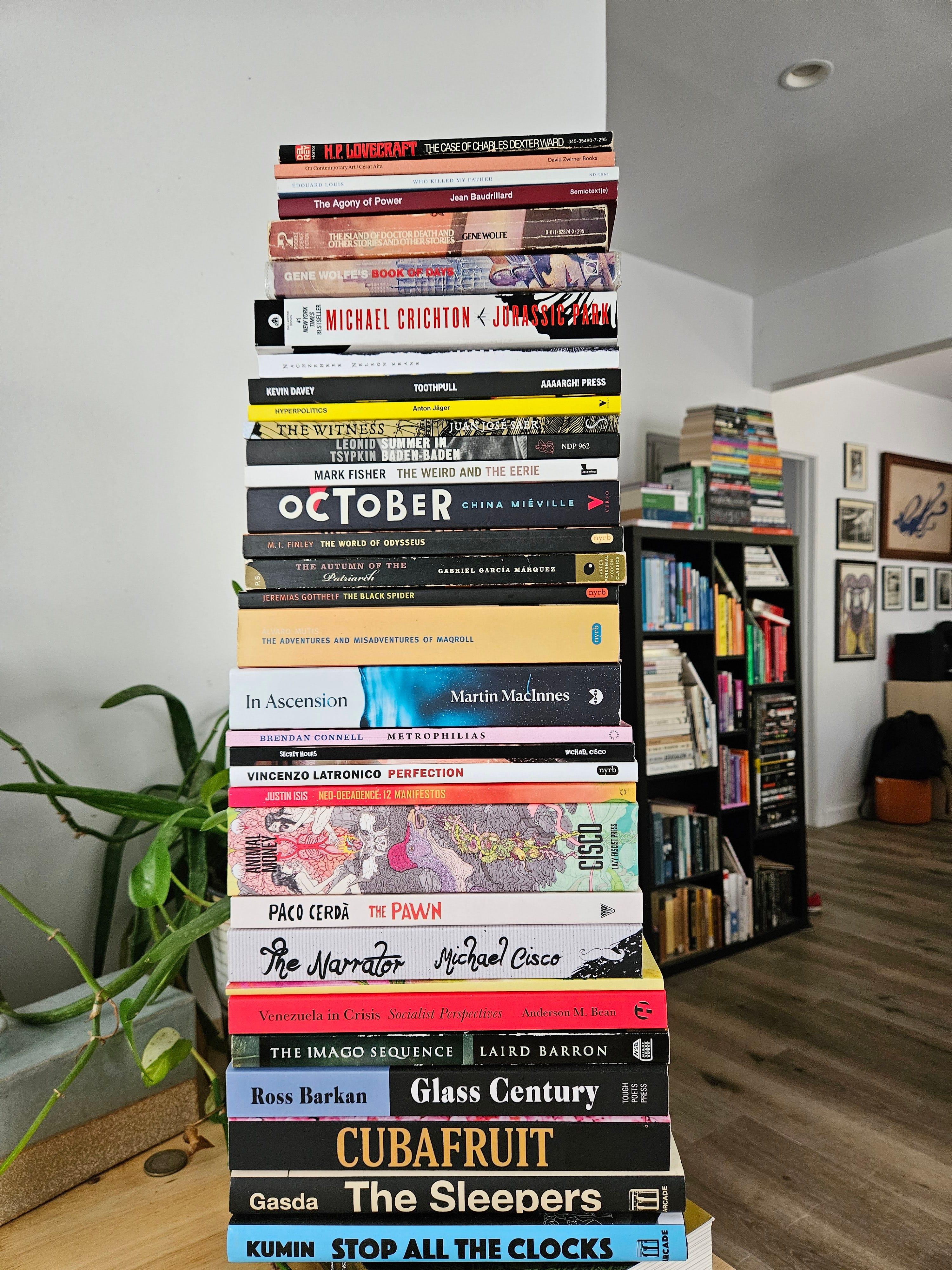
I’ve spent the first half of 2026 being unemployed. Between job hunting, some long-awaited travel, as well as completing work on my own novel (I’m serializing it for free over here), my reading habits have certainly reflected the extra abundance of time and energy in my life. I’ve read a hefty amount of stuff in the past six months and below, in no particular order, are my favorites.
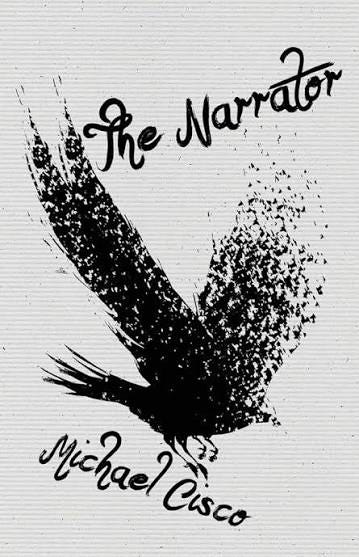
The Narrator by Michael Cisco
I’ve been on a bit of a Cisco binge since discovering his work last year, and it’s a testament to his deep strangeness as a writer that The Narrator, in many ways his most ‘conventional’ novel, is still deeply bizarre. We find ourselves in an alien land, following along with our titular character as he gets conscripted and bureaucratically shuffled around a military assignment with a gang of literal undertakers. Then the hammer drops, and he’s thrust directly into an intractable war involving troops in flying power armor, a press-ganged squadron of escaped institutional patients, scheming military officers, and various opaque supernatural factions. Then it starts to get weird.
As he already demonstrated handily in ‘The Tyrant’, Cisco can orchestrate and set loose a battle scene like no other writer. There are descriptions of gun boat fights in this book so action-packed and so vividly conceived, that they probably rival the most lurid set pieces in Apocalypse Now. Similar to Coppola’s film, The Narrator is a vehemently anti-war tale that slyly communicates the totalizing logic of war, and the sickening fact that some men love the opportunities it brings them, while others simply love the thing itself.
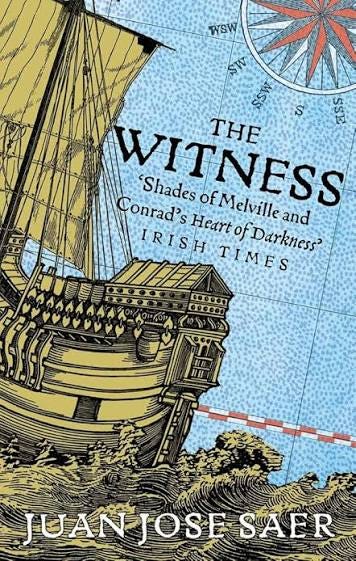
The Witness by Juan Jose Saer
A bizarre subversion of the ‘captivity narrative’. Juan Jose Saer, often considered the Argentine writer of note after Borges, takes us into the mind of a cabin boy kidnapped during the age of exploration by a tribe of cannibals, who recounts the story of his life as an old man. He spends 10 years living amidst a radically alien culture, only to be rescued and returned to Spain to discover the Europe he knew is equally, or perhaps superiorly, alien. A short, dense novel packed full of haunted ruminations about culture, language and our inability to truly fathom those forces when our lives are put through extremes of experience. The cover art comparisons to Melville and Conrad are superficial, at best. This is a short and pensive novel with occasional bursts of horrific violence, a style Latin American writers often seem to have a monopoly on. The Witness is the work of a cunning and seasoned writer.
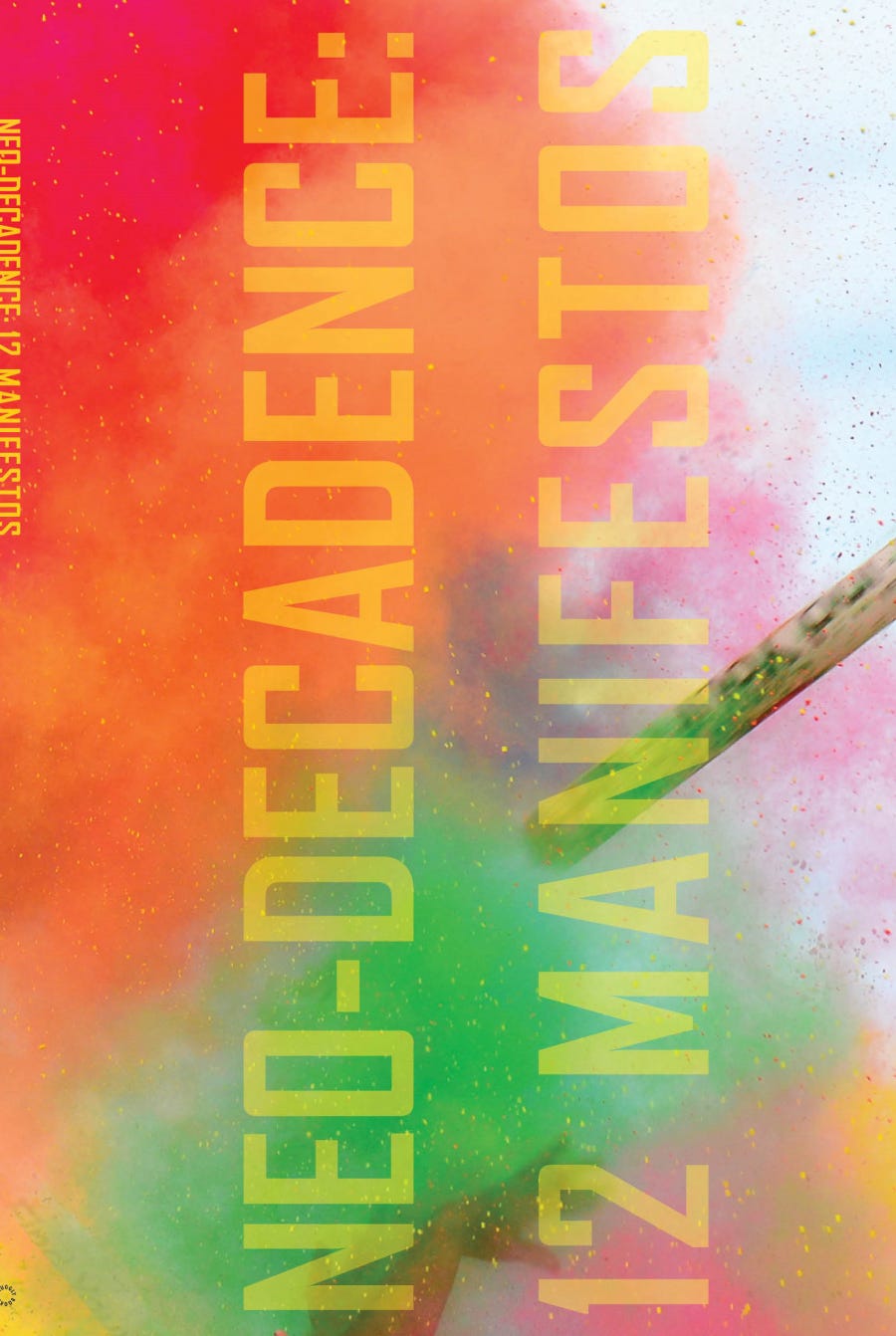
Neo-Decadence: 12 Manifestos, edited by Justin Isis
I’m a big fan of the Neo-Passéism account and it’s various takedowns. So it was a thrill to finally dive into this and discover a rich and lively group of thinkers/writers/artists who insist, with eloquence and panache, that much of the seemingly settled status-quo in our popular culture might just be a bunch of sanctimonious bullshit. But these manifestos don’t merely hold contemporary architecture, cooking, fashion (and of course) literature’s feet to the fire for the smarmy forms of death-worship they engage in. They also articulate a highly constructive vision of the numerous materials, interactions and medias an artist can draw from in our times. I found this collection to be bracing and enlivening, both as a reader and as a very novice writer of fiction myself.
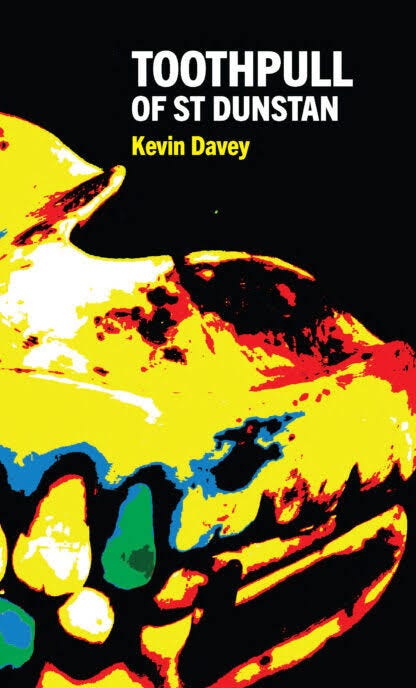
Toothpull of St Dunstan by Kevin Davey
An absolute mind-fuck. An immortal dentist living close to the city gate of Canterbury (the same one as The Tales) recounts his 700 years of practicing the art of pulling teeth, falling in love, expanding his business, and watching the techniques of his field evolve from brutality into modernity in tandem with his tiny little patch of the world. Kevin Davey has constructed an ecstatic, fragmented novel which careens back and forth between olden times and new, as our titular tooth pull witnesses everything from the Corn Law protests to Karl Marx. Defiantly regional, Toothpull of St Dunstan trades the global for the local, and the broadly humanistic for the gruesomely technical world of jawbones, gums and molars, and the various horrid ways we can be parted from them. Joycean in its wordplay, and Blakean in its sheer ecstasy of vision, this is a brilliant, quintessentially British fiction.

Perfection by Vincenzo Latronico
A slick, stylish novel about the deep rot of being a slick, stylish person. Perfection is both a mirror and a death ray: it reflects back to every millennial adult the vapid foundations of our endlessly image-conscious, technologically enmeshed daily lives…while also calling us to task for the cheap narcissism and bottomless insecurity those images and technologies induce in us. Latronico builds up a casually ruthless critique from an assemblage of the gorgeous descriptions and lush surfaces that a young couple living in Berlin move through as life, time, gentrification and reality itself grind ceaselessly onward. It’s 120 pages and I felt sick sad upon finishing it. Surely I’m not like these people…am I?
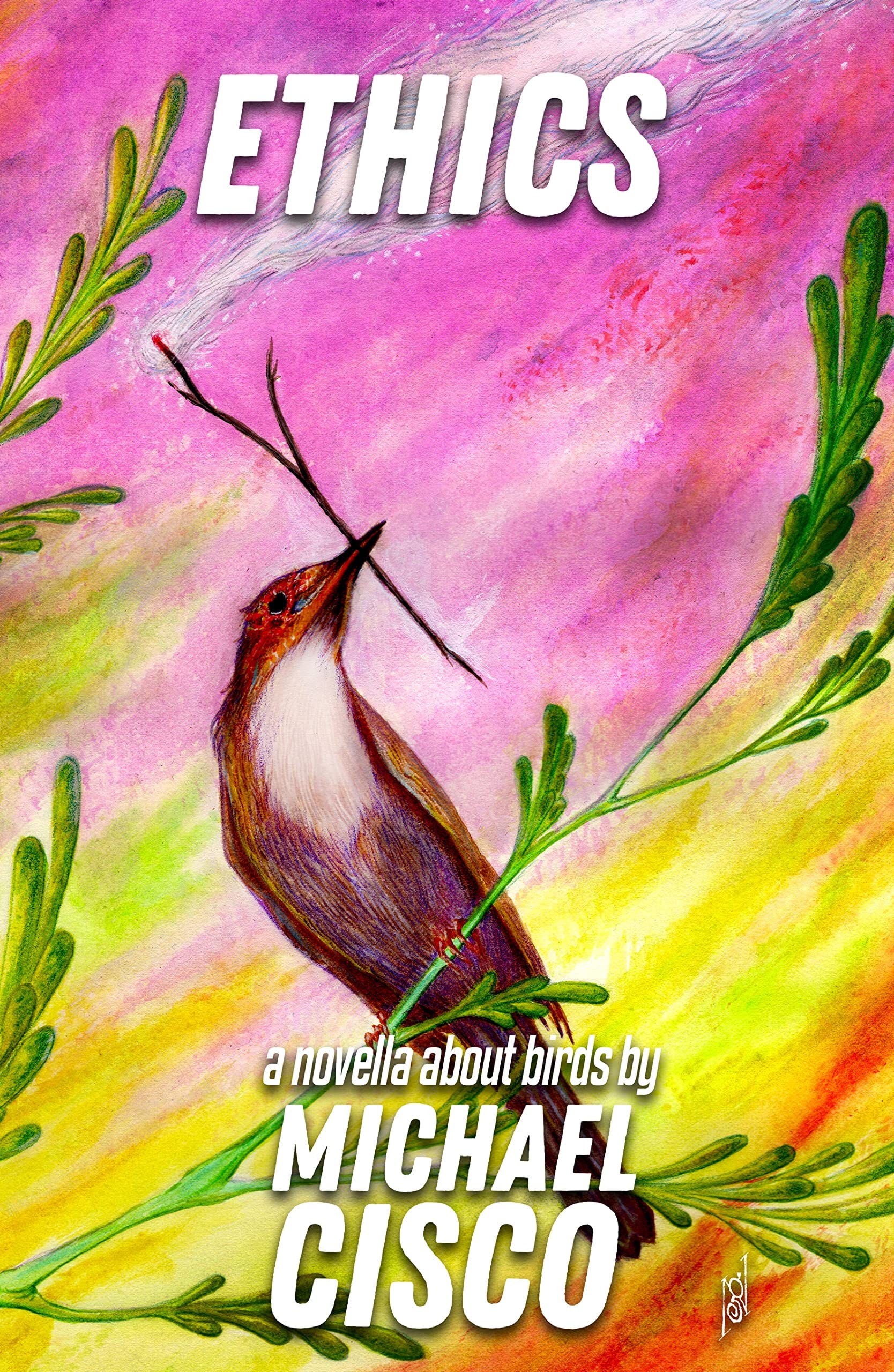
Ethics by Michael Cisco
Hands down, some of the best writing about animals I’ve ever come across. In some ways this slim book gives Watership Down a run for its money…if Watership Down had also included weirdly autistic ruminations on the internal value systems that hawks and songbirds live by (bewilderingly, the book contains a massive appendix of axioms and propositions laying all of this out). Cisco handily proves that ‘world building’ is simply a dull concern next to the far more fraught and vital task of mind building. Ethics casually demonstrates that as weird and fucked up as humans might be…the lives of the animals are surely infinitely stranger. What would horror look like to a bird? What indeed.
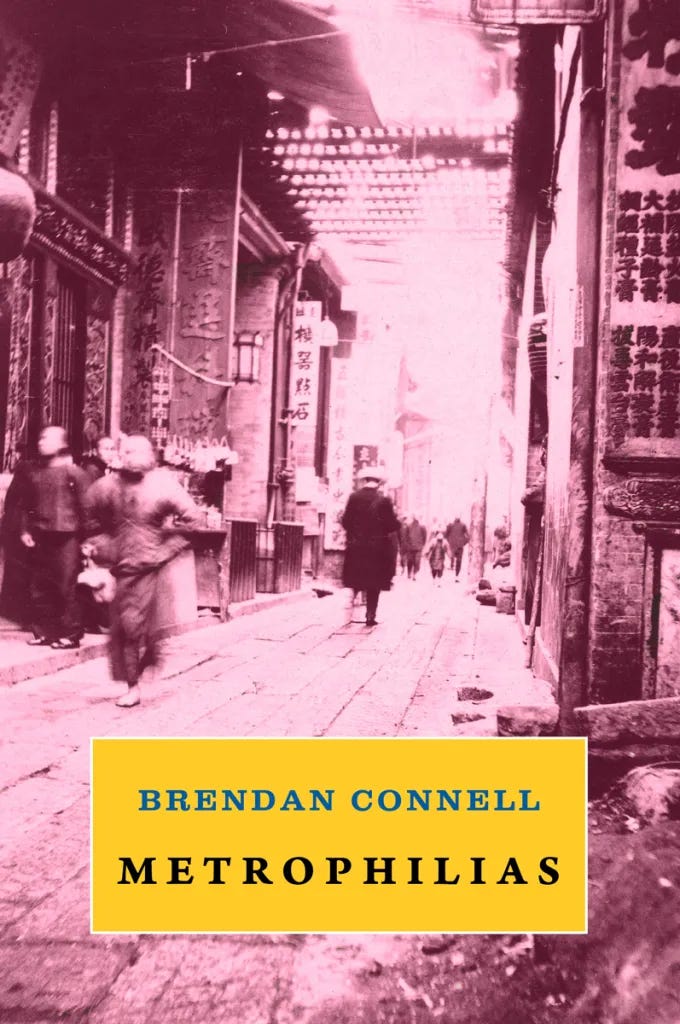
Brendan Connell is the first writer associated with the Neo-Decadent movement whose fiction I’ve read and I really enjoyed this. It’s a collection of 36 vignettes/prose poems, each set in a major city at a different epoch in history. Connell’s prose is lush and he gorgeously evokes slums and pleasure palaces around the world with equal skill, as well as the odd, usually sexually obsessed men who prowl around them, trying to gratify their appetites however they may. Each of these vignettes feels embodied: rich with sensory descriptions of sights, sounds smells and tastes; almost like a miniature tour of the world. Metrophilias is impressively sensual writing.
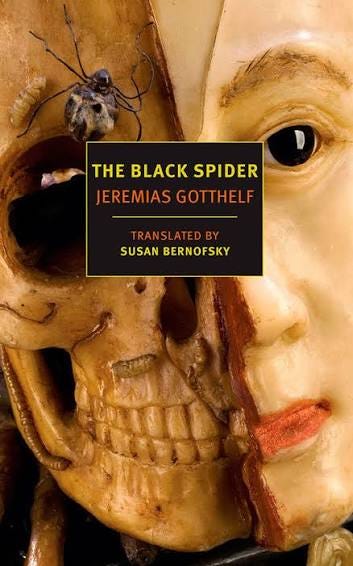
The Black Spider by Jeremias Gotthelf
This little tale opens with a baby being baptized in a bucolic Swiss village, and the descriptions are almost cloyingly pastoral. And then, during the baptism feast, an old man starts telling a story and… WE ARE IN HELL. Cruel medieval lords, exploited and long-suffering peasants, conniving women, devil’s bargains, mass death, multi-generational human folly & hubris, etc. etc. This vicious little story came out in Switzerland in 1842, and yet it feels bleaker and crueler than many of the most nihilistic horror media we enjoy today. The Black Spider is the darkness of the old world, recounting an even deeper darkness from an older age. I’ve seldom read a book with such an intensity of tonal shifts that manages to hold it all together. This works brilliantly.
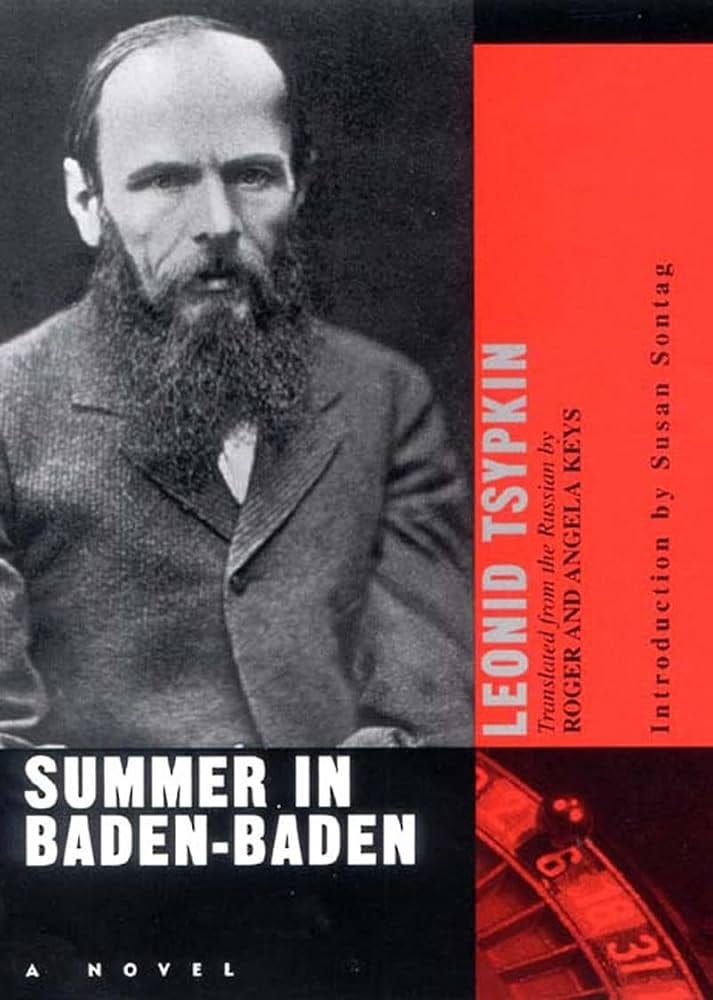
Summer In Baden-Baden by Leonid Tsypkin
Leonid Tsypkin was a Soviet doctor and an ardent admirer of Russia’s reigning 19th century writer, Fyodor Dostoyevsky. Summer in Baden-Baden was the only novel he ever wrote, and it remained unpublished in his lifetime. Miraculously (and just like his idol’s strongest work) Baden-Baden is a powerful, almost world-beating novel. We ping-pong back and forth in time between Tsypkin himself as he rides a train through Russia and contemplates Dostoyevsky’s legacy, and intricately rendered, deeply researched episodes of Dostoyevsky’s own life, in all its comic disastrousness. His temper-tantrums and fights with his long-suffering wife, his epilepsy, his anti-semitism, his financially ruinous gambling addiction… etc. Dostoyevsky’s days offer an endless supply of tragedies and mistakes, at times these mishaps are cruelly undeserved, and at others they seem to be completely self-imposed. Amidst an endless flow of domestic calamity, somehow, he managed to make art.
The novel reflects and refracts these concerns, slipping between the present and the past in delirious and virtuosic fashion. Very few writers can handle time shifts and run ons in sentence and perspective with the casual grace that Tsypkin manages in his sole literary work. This was clearly a labor of love, and Tsypkin seems to have imbibed every journal, letter, and note he could find from Dostoevsky and his family and closest friends in order to render the man to us. It’s a short, gorgeously constructed novel about having to accept the sheer ugliness of what a human life looks like, when weighed against the brilliance of the art that life made. Summer in Baden-Baden is the only book I’ve read so far this year that genuinely made me both laugh out loud and cry. This gets my unconditional recommendation.
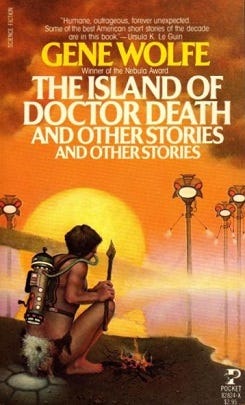
The Island of Doctor Death And Other Stories And Other stories by Gene Wolfe
America’s superlative writer of science-fiction and fantasy, handily proving that his staggering craft can be brought to bear on short stories as surely as in his novels and novel cycles. There are at least three pieces in this book that easily smoke the finest and most celebrated short work in the history of the genre, and another three or four that are merely brilliant. But as if that all wasn’t enough, the final piece, Seven American Nights, on its own stakes Wolfe’s claim as being amongst the finest American fiction writers of the past 50-60 years, regardless of genre or style.
Every story in The Island of Doctor Death is filled with Wolfe’s trademark cunning, his engineer’s eye for building systems within systems. Each is carefully calibrated and balanced to give just enough of a trace to let you know you need to read it again to really begin to grasp the narrative machinery operating behind the scenes. I actually said “oh shit” out loud when I finished the final tale and realized, as only the finest art can make you, that you are being tricked. I knew immediately I would need to go back and re-read it to try and see, if only vaguely, how the magic of this most consummate wizard of prose actually unfolds. Most writers are not worth re-reading. Amongst the small group of those who are, there is an even smaller subset who build their work in a way which demands that re-reading. The Island of Doctor Death, on its own, demonstrates why Gene Wolfe was one such writer.
You’ve got great taste in literature, dude. Do you think you could say which are the best stories in that Wolfe collection? I don’t have time to read his novels (sad!), but you’ve got me thinking I could work a few from that collection into the queue.
I gotta find me that Toothpull. <Sproing!>